

Check out my Medbridge webinar on the Transforming Episode Accountability Model (TEAM) for clinicians! 👇 It’s free with a Medbridge subscription or can be purchased as an individual course from Medbridge.
Not a subscriber? Using my link gives you $106 off your subscription for unlimited CEUs with code DanaStrauss. They have a host of different types of CEUs for various clinicians. The subscription is a must for me since N.J. requires live CEUs and Medbridge adds live webinars monthly.

Table of Contents
**Disclaimer: All opinions and ideas expressed in this article are solely mine and none represent a recommendation or should be viewed as advisement of any kind to anyone to do anything.*
Policy Pulse
What the Accountable Health Communities Model Tested
From 2017 to 2023, the Centers for Medicare & Medicaid Services ran the Accountable Health Communities (AHC) model across 28 communities nationwide. The question was this: if we screen Medicare and Medicaid patients for social needs in healthcare settings and connect them to community resources, can we improve health outcomes and reduce costs?
The model screened over 1 million patients. Thirty-seven percent had at least one unmet social need. The most common barriers to health were housing instability, food insecurity, transportation problems, utility needs, and interpersonal safety concerns.
The results shouldn’t be surprising. Patients with navigation support had 3-7% lower total healthcare costs, driven by fewer ED visits and hospital admissions. The intervention worked because having someone help navigate resources made a measurable difference in whether patients could show up for care and follow through on treatment plans.
How It Actually Worked: The Camden Coalition Example
To understand how this plays out in practice, look at the Camden Coalition in South Jersey. They're a community-based nonprofit that served as one of the AHC "bridge organizations." Think of that as the connective tissue between healthcare systems and community services.
The structure: The Camden Coalition is funded through a mix of federal demonstration grants (they received CMS funding for AHC), state Medicaid dollars (New Jersey allocated funding to support their Regional Health Hub designation), and shared savings arrangements with managed care organizations.
They partnered with five health systems across Camden, Burlington, and Gloucester counties: Cooper University Health Care, Jefferson Health, Virtua Health, CAMcare, and Oaks Integrated Care.
The model: Unlike traditional CBOs that provide a single service (like a food bank or housing program), the Camden Coalition coordinates the entire ecosystem. They train hospital and clinic staff, manage the screening process, run a referral platform, employ community health workers (CHWs) who navigate patients to services, and maintain relationships with dozens of CBOs that deliver actual assistance.
Over the course of their AHC implementation, they screened over 30,000 patients and demonstrated significantly lower ED utilization rates in the intervention group compared to the control group.
The Workflow: From Screening to Better Outcomes
Here's how it worked:
1. The screening happens A patient comes to Cooper Hospital's emergency department or one of the partner clinics. A staff member (sometimes a medical assistant, sometimes a care coordinator, sometimes a CHW stationed at the site) administers the AHC screening tool. It's a standardized questionnaire with 10 core questions covering five domains: housing, food, transportation, utilities, and safety.
The questions are direct. "Do you have a steady place to live?" "In the past 12 months, have you worried your food would run out before you got money to buy more?" "Has lack of transportation kept you from medical appointments, meetings, work, or from getting things needed for daily living?"
The screening takes about 5-10 minutes. If the patient screens positive for any need, they're offered a tailored referral list through the Camden Coalition's platform called My Resource Pal (powered by Findhelp). Everyone who screens positive gets this list.
2. Navigation kicks in for high-risk patients But not everyone gets navigation support. The model focused resources on patients most likely to benefit. If a patient screened positive for at least one social need AND reported two or more ED visits in the past 12 months AND lived in the community (not in a nursing facility), they were eligible for navigation services.
About 18% of all screened patients met these criteria. Of those eligible, 79% opted in to navigation. An important takeaway is that most people wanted the help when it was offered.
3. The community health worker makes contact A CHW from the Camden Coalition reaches out, often by phone. They don't just confirm the screening results. They dig deeper.
Take Frank, one of the patients the Camden Coalition team described. He screened positive for housing and transportation needs. But when his CHW talked with him, the real issue emerged: employment instability due to a felony record, which meant he couldn't get stable work, which meant he couldn't afford reliable transportation, which affected his housing.
The CHW connected Frank with a job coaching program at Hispanic Family Center—a resource Frank, a Black man, didn't even know would be available to him. The program helped him find employment that included transportation as part of the position. That job stability helped him save for a car and work toward stable housing.
4. The navigation process The CHW uses what the Camden Coalition calls their COACH framework—particularly "observing the normal routine" and "connecting tasks with vision and priorities." This isn't about handing someone a phone number and moving on. It's about understanding what's actually preventing someone from accessing help and troubleshooting those barriers.
Maybe the food pantry has hours when the patient is at work. Maybe the housing assistance application requires documents the patient doesn't have. Maybe the patient tried calling a service before and got lost in voicemail. The CHW helps solve these practical problems.
The Camden Coalition Health Information Exchange plays a role here too. With patient consent, it allows real-time data sharing between hospitals and community providers, so the CHW can see if someone had an ED visit, and the hospital can see if the patient successfully connected with services.
5. The closed-loop referral When the CHW refers a patient to a CBO—say, a food bank or a transportation program—they track whether the patient actually got served. This is the "closed loop" part. They follow up with both the patient and the CBO to confirm the connection happened and the need was addressed.
This is also where the system often breaks down. CBOs are frequently at capacity. They have waitlists. The Camden Coalition has to maintain relationships with multiple providers for each type of need, know which ones have availability, and sometimes get creative when standard resources aren't accessible.
6. The impact on health outcomes Here's how it connects back to healthcare: when Frank got stable employment with transportation, he could make medical appointments. When Jeanette (another patient who screened positive for food insecurity around the holidays and was stressed about caring for her grandkids) got connected to resources, she had fewer crises that might have sent her to the ED.
The model didn't necessarily resolve every social need completely—the evaluation showed mixed results on whether needs were fully met. But navigation demonstrably reduced healthcare utilization and costs. Why? Because having someone actively helping you navigate the system makes it more likely you'll access primary care instead of the emergency department, follow up on referrals, and stay connected to care.
Find more information about case studies of post-model scaling and spreading of innovations from the AHC Model here. Additional examples and resources are in the newsletter’s “Sources and Additional Links” page here.
Why This Model Matters
The AHC model proved several important things:
Screening at scale is possible. A million patients were screened. It can be integrated into clinical workflows in emergency departments, primary care clinics, and specialty settings. Staff can be trained to do it. Patients are generally receptive.
Social needs are prevalent and consequential. Over a third of Medicare and Medicaid patients have at least one unmet social need affecting their health.
Navigation is the critical piece. Just identifying needs and giving people a list doesn't move the needle. Having someone like a CHW, a navigator, a care coordinator who stays with the patient and helps them actually connect to resources is what makes the difference.
Infrastructure requires investment. The Camden Coalition exists because of deliberate funding choices: federal grants, state Medicaid dollars, and payment arrangements that recognize the value of care coordination. Organizations like this don't emerge spontaneously. They need sustained financial support.
CBOs are the rate-limiting factor. The biggest barrier isn't screening. It's not even navigation. It's that community-based organizations providing housing assistance, food support, and transportation programs are chronically underfunded and at capacity. You can't refer people to services that don't exist or can't take more clients.
What Clinicians and Innovators Should Know
For clinicians: Screen. Even if you're worried you can't solve every problem, the data matters. Document the barriers you identify. When you can't address a transportation need or housing instability, write it down. That documentation builds the case for system change.
Know what's available in your community. Build relationships with local CBOs or organizations like the Camden Coalition if they exist in your area. A warm handoff to a specific navigator or program is far more effective than generic information.
For innovators: If you're building tools or solutions for social needs, understand that the workflow requires people. Technology can facilitate screening, referrals, and tracking, but it can't replace navigation. The Camden Coalition used a platform (Findhelp/My Resource Pal) to manage referrals and track outcomes, but that platform worked because CHWs used it to do their jobs better. It was not used as a replacement for human connection.
Focus on interoperability. If your tool doesn't integrate with EHRs and CBO case management systems, you're creating more work, not less. The Camden Coalition's Health Information Exchange enabled data sharing across providers precisely because they invested in making systems talk to each other.
The Funding Reality
Here's what sustaining a model like Accountable Health Communities requires:
Someone has to pay for bridge organizations like the Camden Coalition. That means Medicaid reimbursement for navigation services, state funding for regional health infrastructure, or value-based payment arrangements that recognize preventing an ED visit is worth something.
CBOs need dedicated, stable funding to build capacity. Grants help build infrastructure and are often an important step, but they usually aren’t enough. If we want them to absorb referrals from healthcare systems, they need resources to hire staff and expand services.
Navigation itself needs to be recognized as a reimbursable service. Several states have been moving in this direction through Section 1115 waivers and Medicaid state plan amendments, partly because of what the AHC model demonstrated. However, federal legislation enacted in 2025 imposes stricter budget neutrality requirements on 1115 waivers starting January 1, 2027, which may make it harder for states to get approval for innovative payment approaches that require upfront investment.
Why You Should Believe in This
The AHC model worked because it acknowledged reality: patients live in the world, not in clinical pathways. Meeting clinical needs is necessary but not sufficient. Whether someone can actually get healthier depends on whether they can get to appointments, afford food, and live in stable housing.
Frank didn't need a better diabetes medication. He needed a job that came with transportation so he could get to his medical appointments and work toward stable housing.
Jeanette didn't need a lecture about nutrition. She needed help getting food for her grandkids so she wasn't overwhelmed with stress that kept her from taking care of herself.
The model proved that when we identify these barriers, connect people to someone who can help navigate resources, and invest in the infrastructure to make that happen, patients have better outcomes and use healthcare more appropriately.
This structure is documented, measured, and replicable.
The question now is whether we can actually fund and scale it.
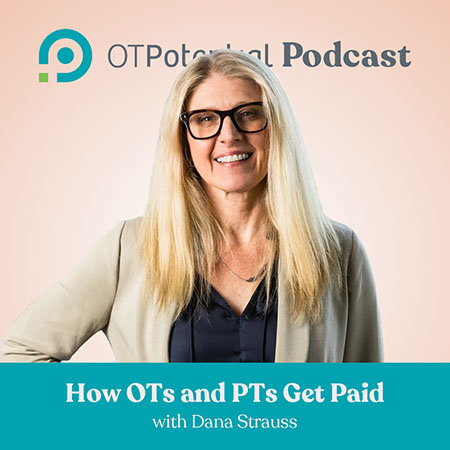
Are you an OT or a PT? Check out my podcast for OT Potential on “How PTs and OTs Get Paid” here:
Career Moves and This Week, Try This
Keep it simple. The Timeless Autonomy Resources page has great resources for this week’s newsletter. Learn more about 1115 waivers, CBOs, and the AHC Model by checking out the links I shared there.
New knowledge acquisition is critical to career growth, particularly for those interested in non-clinical career paths.
Career growth is built one educational block after another. If you want non-clinical options, be someone “knowledge rich.” Think of learning non-clinical/clinically-adjacent topics as part of your career growth and development. Each piece of knowledge you acquire is an opportunity to find what “lights you up.” Follow the flickers.
You can become someone whose knowledge and “second brain” has access to solutions when problems come up that you can solve.
You can liken it to investing broadly when you are young in things like total stock market index funds and international index funds, knowing that the compounding of those investments over time will pay you dividends. If you want to be financially independent, you must have invested broadly and diversely over time.
Careers are no different. Gather knowledge and experience. Dig into topics that interest you. Explore different avenues. Make notes about what you learn and store in your personal knowledge management tool.
This is really great news. It means there isn’t a specific “formula” to worry about first. Start learning and exploring. Find what resonates for you. Find what can combine with your clinical knowledge to give you a superpower!
You WILL find ways to apply that knowledge. You WILL find topics that resonate. You WILL find ways to share that. You WILL open doors to opportunities by combining knowledge areas to solve problems, stand out, or become indispensable.
I’m convinced that the willingness to learn about healthcare innovation outside the clinic is the “X” factor that predicts the potential for career growth.
*Disclaimer: All opinions and ideas expressed in this article are solely mine and none represent a recommendation or should be viewed as advisement of any kind to anyone to do anything.*
